Publication Charge Grants
Publication Charge grants are intended to help Rocky Mountain geoscientists offset costs for publication. The costs can include page charges, color charges, and or open-access charges for articles relevant to Rocky Mountain geoscience.
Grants are awarded by the Trustees either as part of the scholarship award process or on a standalone application.
Three Publication Grants were awarded for 2026:
Dorian Gursky, PhD Candidate, Colorado School of Mines
Dorian is studying bentonite beds in the latest Cretaceous Hell Creek Formation in Montana and North Dakota. The Hell Creek Formation is noted for abundant and well-preserved dinosaur fossils such as Tyrannosaurus rex and Triceratops. Dorian has recognized 12 new ash beds in the lower to middle Hell Creek that will be dated using zircon U-Pb CA-ID-TIMS geochronology paired with Bayesian age-stratigraphic modelling. He will also use thin section petrology and optical cathodoluminescence to characterize the mineralogy of basal Hell Creek sediments. The objective of the work is to permit highly resolved temporal insight into the evolution and ecology of end Cretaceous floras and faunas and to better evaluate regional sedimentary responses to syndepositional tectonism (i.e., Laramide uplifts) and sea-level retreat of the Western Interior Seaway.
Dorian’s work is under the direction of Dr. Eric Roberts.
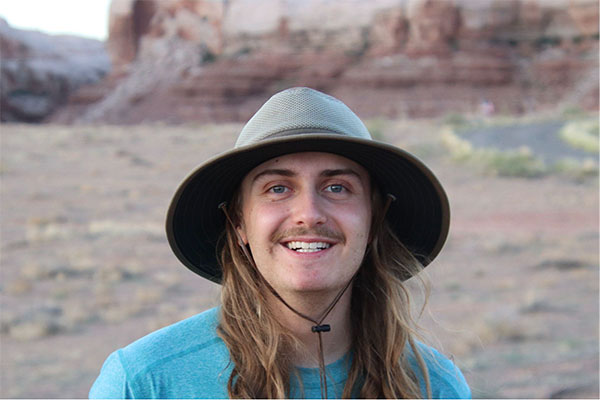
Soren Rollin, B.A., Geological Sciences, University of Colorado Boulder
This project analyzes the lunar meteorite NWA 11788 to determine its age, origin, and relationship to other lunar samples. Soren combines petrologic analysis with Pb-Pb geochronology to test potential launch pairings and constrain its source region on the Moon, providing insight into lunar impact and volcanic history.
Soren also investigates metal phases and shock formed minerals using geochemical and spectroscopic methods to reconstruct impact conditions and thermal history. This work helps clarify how lunar materials form and evolve, with broader implications for understanding the Moon’s geologic history.
Soren’s work is under the direction of Dr. Lon Abbott.
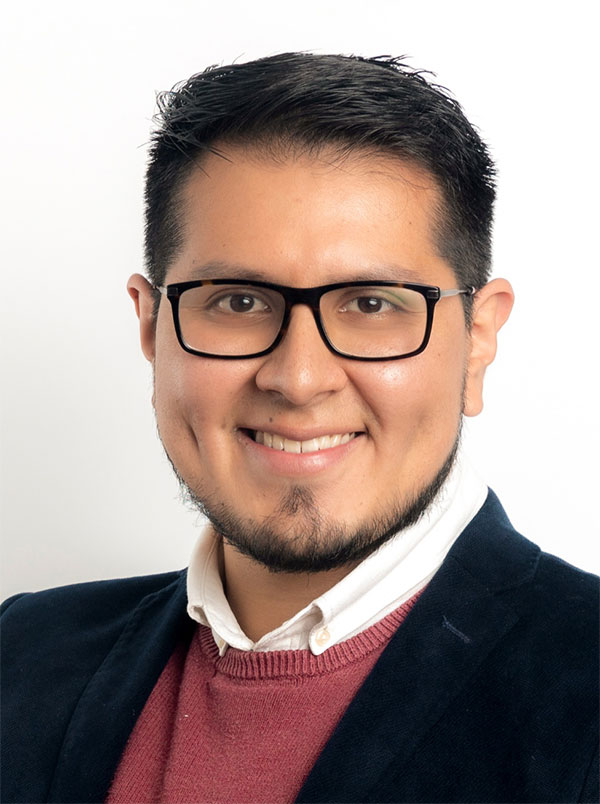
Daniel Maya, PhD Candidate, Geology, University of Houston
Daniel’s dissertation investigates Early Cretaceous rifting between South America and Africa and its impact on petroleum systems in the offshore Rio de la Plata region. He integrates tectonic reconstruction, basin analysis, and geophysical methods to evaluate crustal evolution and hydrocarbon potential in deepwater Uruguay. In the first chapter, he uses gravity, magnetic, well, and seismic data to demonstrate that clockwise rotation of the Salado microplate-controlled rift geometry, sediment distribution, and thermal regimes during basin development. This work establishes a regional tectonic framework linking multistage rifting to the formation of key depocenters and structural features.
Building on this framework, Daniel develops a 3D basin maturity model and seismic inversion workflow to assess petroleum systems and reservoir properties. By integrating stratigraphy, thermal modeling, and machine learning, he identifies the distribution and maturity of Aptian and Cenomanian–Turonian source rocks and highlights prospective hydrocarbon trends. Ongoing work applies 3D seismic inversion and rock physics modeling to estimate reservoir quality and total organic carbon in data-limited areas using pseudo-well approaches. Together, this work provides a comprehensive, predictive framework for evaluating hydrocarbon potential in a frontier basin and reduces exploration uncertainty in deepwater Uruguay.
Daniel’s work is under the direction of Dr. Paul Mann.
Standalone Grant Application Guidelines:
- Authors must submit proof of publication and an invoice for charges in a credible journal.
- Valid charges are page charges, color charges, and/or Open Access charges
- Requests will be considered on a case-by-case basis and grants will be offered at the sole discretion of the Trustees of the RMAG Foundation
- The Grant amount will be at the sole discretion of the Trustees of the RMAG Foundation
Grant Requests must include the following:
- Article title and authors’ names
- Publication, journal or book name
- Summary of new and unique information disseminated in this publication as it relates to Rocky Mountain geosciences (300-500 words maximum)
- Estimated publication date
- The grantee agrees to Provide one copy of the publication to the RMAG Foundation
- The grantee agrees that the publication name, article title and author(s) name(s) be published for publicity purposes on the following:
- RMAG Foundation website
- RMAG Outcrop newsletter article
- Slides promoting the Foundation at RMAG functions
Grant Request Submission:
Submit grant requests to rmagfoundation@rmagfoundation.org